

Last weekend, I found my dad’s old N64 in the attic—dust caked on the gray plastic, a crumpled copy of Super Mario 64 tucked in the cartridge slot, and a joystick so sticky I had to scrub it with rubbing alcohol. I hooked it up to my TV, blew into the cartridge like my 10-year-old self used to (don’t judge—we all did it), and hit power. Within 30 seconds, that bouncy main theme started playing, and suddenly I wasn’t 28 anymore—I was sitting on my living room floor, yelling at Bowser to stop stealing stars. But here’s the wild part: After an hour of falling off Peach’s castle and laughing at how blocky Mario’s face looked, I realized something. These games—with their pixelated graphics and clunky controls—still hit harder than some modern AAA titles. Not because they’re “better,” but because they had a secret superpower modern games often forget: they turned limitations into magic.
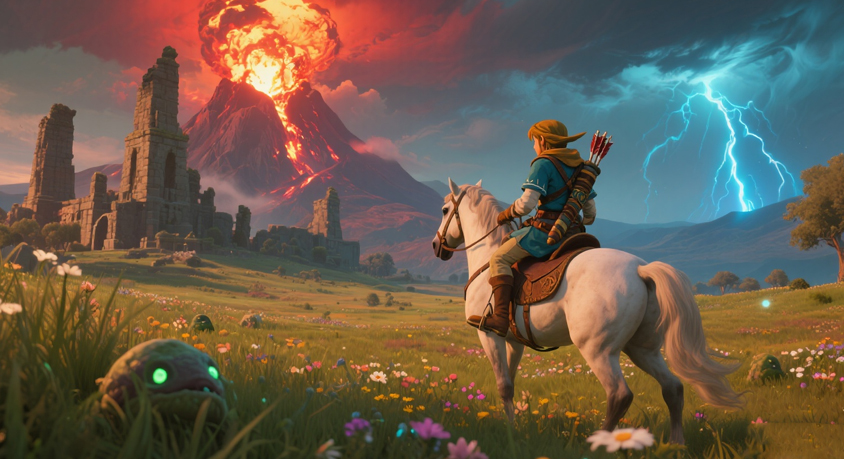
Let’s talk about design philosophy—PS1 and N64 developers didn’t have 4K graphics or open worlds the size of countries. They had polygons so jagged they looked like broken glass, and memory cards smaller than a pack of gum. So they did what creatives do when they’re boxed in: they got clever. Take Super Mario 64. Before it, most platformers were 2D—think side-scrolling Mario or Sonic. But Nintendo said, “What if we let players run around Peach’s castle instead of just left to right?” It was messy—camera angles would flip randomly, and sometimes you’d fall off a ledge because the 3D depth was wonky—but it felt revolutionary. It’s like if someone gave you a crayon and a napkin and said “draw a universe”—you can’t make it perfect, but you make it yours. That same energy is why The Legend of Zelda: Ocarina of Time works—its dungeons are tight, its puzzles force you to think, not just mash buttons. Modern games like The Legend of Zelda: Breath of the Wild? They owe that “explore first, guide later” vibe to Ocarina. Even Todd Howard, the guy behind Skyrim, said Ocarina’s open-world design “taught us how to make players feel like they’re discovering something new.”
Then there’s the music—oh, the music. PS1 changed the game with CD audio; suddenly, games didn’t just have beeps and boops—they had full orchestral tracks. Final Fantasy VII’s “Aerith’s Theme” still makes me tear up, and it’s just a 16-bit melody. Why? Because it wasn’t just background noise—it told a story. The N64 used midi files (think cheap keyboard sounds), but developers turned that limitation into gold too. Mario 64’s “Bob-omb Battlefield” is so catchy because it’s simple—you can hum it after one listen. Modern games like Elden Ring or Cyberpunk 2077 have amazing soundtracks, but they’re often so polished they fade into the background. PS1/N64 music? It stuck with you like a pop song you hear on the radio—you’d find yourself whistling it in math class, or while walking to the store. Streamer xQc even did a whole stream last month where he replayed Crash Bandicoot (PS1) just to listen to the “N. Sanity Beach” theme. “This song is why I started gaming,” he said, grinning as he jumped over crates. “It’s not fancy, but it feels like home.”
And let’s not sleep on how these games taught modern developers to prioritize fun over flash. Crash Bandicoot’s levels were short, hard, and addictive—you’d die 10 times on a single section, but you’d hit “restart” immediately because you knew you could beat it. Modern games often throw hours of cutscenes or complicated systems at you, but PS1/N64 games? They got to the point. You turned it on, picked up the controller, and played. It’s like comparing a homemade burger to a fancy restaurant meal—one’s got all the trimmings, but the other tastes like nostalgia and joy.
Sure, my old N64’s joystick still sticks, and my PS1 copy of Spyro the Dragon skips sometimes. But when I play those games, I’m not just playing— I’m remembering why I fell in love with gaming in the first place. They didn’t have the tech to be perfect, so they focused on being memorable. And that’s the lesson modern games still need to learn: you don’t need 4K graphics or a $100 million budget to make something that stays with people. Sometimes, all you need is a sticky joystick, a catchy tune, and a little bit of magic. Now if you’ll excuse me, I’ve got a date with Bowser—and this time, I’m getting all the stars.
Disclaimer: Mention of any brand or trademark is for identification only and does not imply partnership or endorsement