
There is a conversation that happens in thousands of households every year, often quietly, often after a missed dose of medication or a blood pressure reading that went unrecorded. An adult child living in a city far from their parents receives a phone call. Your mother forgot her heart medication again. Your father’s blood pressure has been high for weeks but he did not mention it. The conversation shifts, inevitably, toward a question no one wants to ask: should one of you move back, or should they move closer to you? The assumption embedded in that question is that distance makes safe care impossible. But the assumption deserves scrutiny. The problem is not distance. The problem is that the information and the intervention have been trapped in the same physical space as the person needing care.
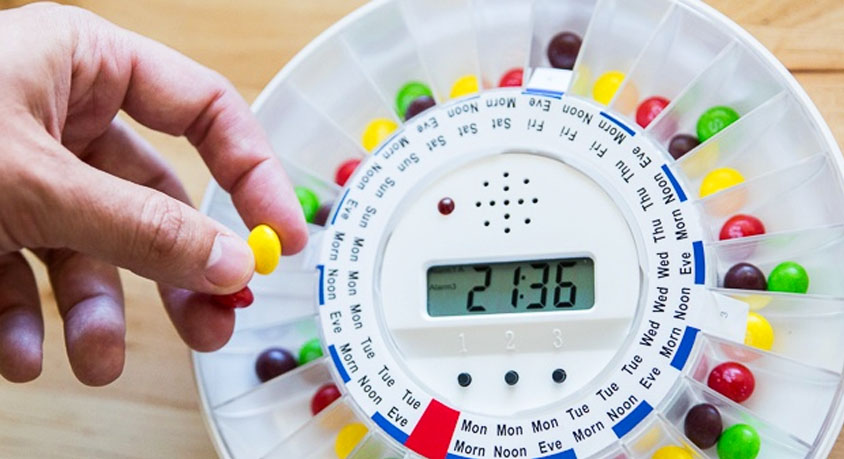
Consider the mechanics of medication adherence. A 2021 study published in the Journal of the American Geriatrics Society found that nearly half of older adults managing chronic conditions at home miss at least one prescribed dose per week. The reasons are rarely intentional. Pill bottles blend into countertops. Morning and evening doses blur together. A change in routine—a doctor’s appointment, a visit from a grandchild—disrupts the pattern. The conventional solution is a pill organizer filled weekly, but that only solves the organizational layer, not the memory layer. A smart medication dispenser addresses a different part of the problem. It locks doses until the scheduled time, emits an audible and visual alert that cannot be ignored, and if the dose remains untaken after a set interval, it sends a notification to a designated caregiver. The device does not assume the user will remember. It assumes they will not, and builds the system around that assumption.
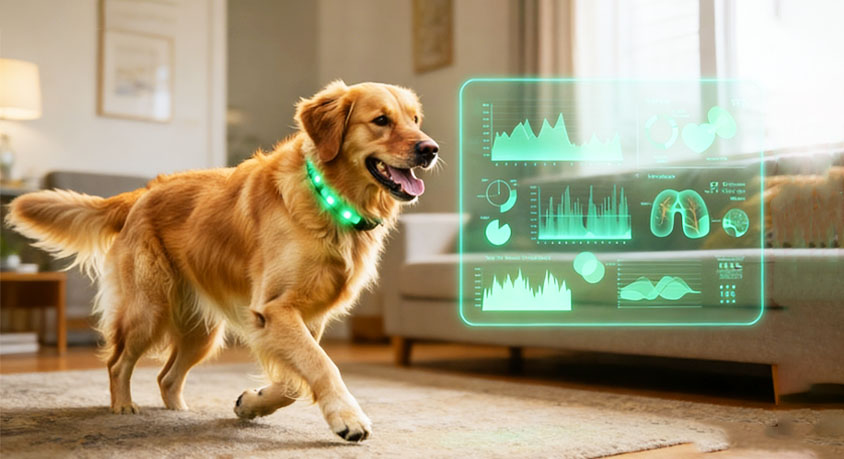
The same principle applies to vital sign monitoring. A connected blood pressure cuff that transmits readings directly to a cloud platform eliminates the step where a handwritten log is either forgotten or inaccurately recalled during a telehealth appointment. Data from the Veterans Health Administration’s home telehealth program indicates that patients using connected monitoring devices for hypertension showed a 25 percent reduction in hospital admissions compared to those receiving standard care. The mechanism is straightforward: when readings deviate from a threshold, a nurse or caregiver intervenes before the deviation becomes a crisis. The device does not replace clinical judgment. It simply ensures that judgment is applied at the moment it can still prevent deterioration.
For families separated by geography, these devices serve a function that goes beyond data collection. They restructure the pattern of communication. Without them, the adult child calls to ask how things are going. The parent, not wanting to worry anyone, says everything is fine. The call ends with no actionable information. With a smart dispenser, the adult child does not need to ask whether medication was taken. They receive a confirmation or a quiet alert. With a connected cuff, they do not need to ask about blood pressure trends. They can see the weekly summary on a dashboard. The conversation shifts from surveillance to genuine connection, freed from the undercurrent of anxiety that usually drives it.
The economic architecture supporting these devices differs across regions, and understanding it matters for anyone considering them. In the United States, Medicare Advantage plans increasingly offer coverage for connected medication dispensers and remote patient monitoring devices under what are called chronic care management benefits. A 2023 analysis by the Commonwealth Fund showed that over 70 percent of Medicare Advantage plans now include some form of remote monitoring coverage, often with zero copay for the devices themselves. For families navigating the American healthcare system, this means the cost barrier is often lower than assumed—the device may already be covered under an existing plan. In Southeast Asia, where centralized reimbursement structures are less common, the value proposition shifts. The devices become a mechanism for preserving economic independence. A fall or a preventable hospitalization often triggers a cascade: a parent moves in with an adult child, a job is adjusted, housing arrangements change. A smart dispenser that prevents a medication-related hospitalization costs roughly the same as a single month of city rent in Bangkok or Jakarta. The arithmetic is not sentimental. It is actuarial.
There is a deeper pattern here about the nature of independence itself. Independence is often framed as the absence of help. But that definition is misleading. True independence in later life is not about doing everything alone. It is about having the right help arrive at the right time without sacrificing agency. A pill dispenser does not remove a person’s ability to manage their own medications. It removes the cognitive friction that makes management unreliable. A connected cuff does not turn a parent into a patient. It allows a clinician or a family member to see what is happening without demanding the parent perform the labor of reporting.
The risk with any discussion of remote care technology is that it sounds like surveillance dressed in softer language. But the distinction lies in what is being monitored and who controls the flow of information. A smart dispenser does not track location. A connected cuff does not watch movement. They track adherence and biometrics, and the data flows according to permissions set by the user. The parent can choose who receives alerts and under what conditions. The technology does not replace their judgment. It provides a safety net that catches what falls through the gaps of memory and routine.
Disclaimer: Mention of any brand or trademark is for identification only and does not imply partnership or endorsement