



There is a strange symmetry in how we think about energy storage. A homeowner in California installs a Powerwall on the garage wall, pays fifteen thousand dollars for it, and sleeps easier knowing that when the grid fails, the refrigerator will keep running. That same homeowner parks a seventy-five-thousand-dollar electric vehicle in the same garage, a vehicle containing five to ten times the battery capacity of the Powerwall, and accepts that during a blackout, that massive battery will sit idle. The cognitive dissonance is striking. The battery in the car is chemically identical to the battery on the wall. It stores electrons in the same way, discharges them through similar inverters. The only difference is the bidirectional flow of current. The wall battery was designed to send power out. The car battery, in most installations, was not.
The technology that bridges this gap is called Vehicle-to-Home, or V2H. The concept is deceptively simple: instead of current flowing only from the charger into the car, it flows in both directions. When the grid is stable, the car charges as usual. When the grid fails, a transfer switch isolates the home from the utility lines, and the car begins discharging into the home panel. The refrigerator cycles. The lights stay on. The modem and router continue to draw power, keeping the household connected. In warmer climates, the air conditioner can run for hours—sometimes days—depending on the battery capacity of the vehicle and the efficiency of the home.
The numbers matter here. A typical home backup battery system like the Tesla Powerwall 3 stores approximately 13.5 kilowatt-hours of usable energy. A Ford F-150 Lightning, by contrast, offers a standard-range battery of 98 kilowatt-hours and an extended-range option of 131 kilowatt-hours. The vehicle contains roughly seven to ten times the storage capacity of a dedicated home battery. For a household drawing about 1.5 kilowatts continuously—enough to keep the refrigerator, a few lights, a fan, and the modem running—a Powerwall would provide roughly nine hours of backup. The same home running off an F-150 Lightning would have three to four days of autonomy without any conservation measures. With selective load management, that extends to a week or more.
The technical architecture required to enable this is more complex than simply plugging a cord into the car’s charging port. V2H requires three components working in coordination. The vehicle must have bidirectional charging capability built into its onboard charger. The home must have a bidirectional EVSE—the charging station—that can manage power flow in both directions. And there must be a transfer switch or a home energy management system that disconnects the home from the grid during an outage to prevent backfeeding, which poses a serious safety risk to utility workers. This last component is where IoT systems enter the picture. The energy management system monitors grid status, communicates with the charger, and orchestrates the switch between charging and discharging modes. It can also perform load shedding—temporarily cutting power to non-essential circuits like the dryer or the pool pump—to extend the vehicle’s available runtime during an extended outage.
The geographic variation in V2H adoption reflects the underlying incentives. In the United States, the appeal is concentrated in regions prone to grid instability. California’s Public Safety Power Shutoff events, triggered during high wildfire risk, can leave homes without power for days. The Northeast, with its aging infrastructure, sees outages from winter storms and summer heat waves. In these contexts, V2H transforms the EV from a vehicle that must be parked during an outage into a resource that becomes more valuable precisely when the grid fails. The homeowner does not lose mobility, because the car retains enough charge for essential trips. The calculation shifts from “how do I keep my battery from draining” to “how do I allocate this storage between mobility and home backup.”
In Southeast Asia, the value proposition takes a different shape. Grid stability varies widely across the region, with some areas experiencing scheduled outages, voltage fluctuations, and unplanned interruptions that can last from hours to days. Air conditioning is not a luxury in tropical climates; it is a health consideration during heat waves. A V2H-capable vehicle provides not only backup power but also a form of energy arbitrage. In markets with time-of-use electricity pricing or where diesel generators are the conventional backup solution, the economics favor the EV. A small generator might run a refrigerator and a few lights but cannot support air conditioning without significant oversizing and fuel consumption. A V2H system running off an EV produces no noise, no exhaust, and no refueling logistics beyond the normal charging routine.
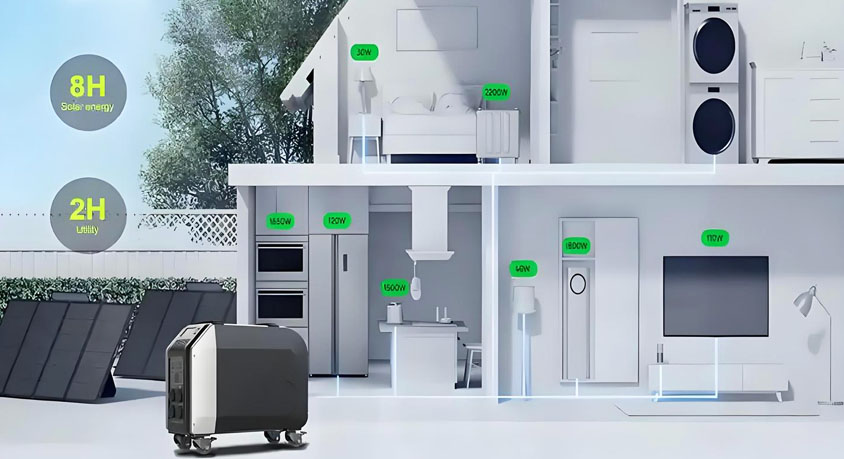
The IoT layer that enables intelligent V2H operation does more than just flip a switch during an outage. It learns household consumption patterns. It can prioritize critical loads—the refrigerator, the sump pump, the medical equipment—while deferring discretionary loads. It can coordinate with solar panels if present, charging the vehicle from solar during the day and discharging to the home at night, effectively turning the car into a time-shifting buffer for renewable energy. This transforms the vehicle from a passive storage device into an active participant in home energy management.
There are limitations that temper the enthusiasm. Not all EVs currently support bidirectional charging. The hardware—a bidirectional charger and transfer switch—adds cost, typically ranging from four thousand to eight thousand dollars installed. The vehicle must be home to provide backup, which is not always the case. And the system introduces additional cycles on the vehicle battery, though early data suggests the impact on battery degradation is minimal when managed properly, as the depth of discharge during home backup is generally shallower than during driving.
The deeper question V2H raises is about the relationship between transportation and housing. For decades, these two categories of expenditure have been treated as separate. A car is for moving. A house is for living. But both contain massive battery capacity that sits unused for most of the day. The average car is parked 95 percent of the time. The average home consumes energy intermittently. V2H does not invent new storage. It connects storage that already exists, allowing it to serve two purposes instead of one.
Disclaimer: Mention of any brand or trademark is for identification only and does not imply partnership or endorsement