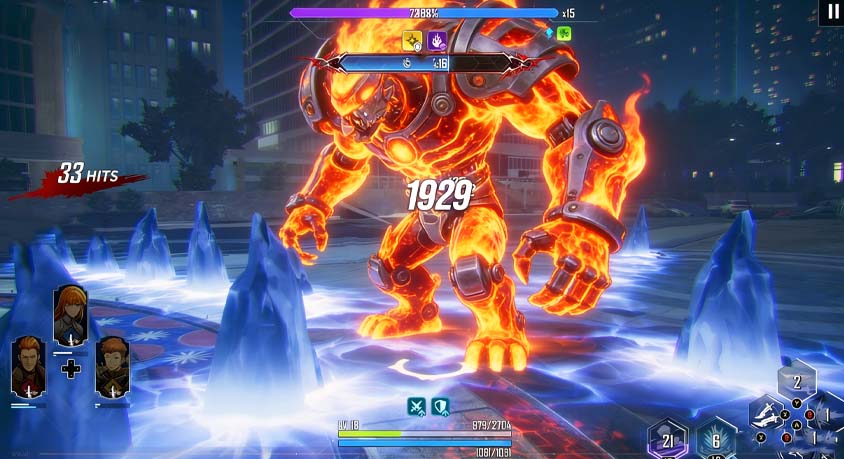
You're playing Final Fantasy VII Rebirth, a gorgeous, sprawling RPG that cost millions of dollars and thousands of hours to create. You're invested in the story. You care about the characters. You're ready for the next emotional beat, the next epic boss fight, the next twist in this beloved saga. And then, the game presents you with a door. Behind that door is not narrative progression. Behind that door is not character development. Behind that door is a small, brightly colored, seemingly innocent mini-game that will consume your soul, fracture your sanity, and make you question every life choice that led you to this moment. For me, that game was "Gears and Gambits," a deceptively complex strategy mini-game tucked away in the Gold Saucer. And as I failed it for the fifteenth time, watching my poorly coordinated units get slaughtered by waves of enemies while a cheerful timer counted down my shame, I had an epiphany: this isn't a game. This is psychological warfare. And Square Enix is winning.
The phenomenon of the brutally difficult mini-game is not new. RPGs have been hiding these mini-games in their corners since the dawn of the medium. But Rebirth has elevated this tradition to an art form, or perhaps a form of torture, depending on your perspective. The game is stuffed with them: piano playing that requires rhythm game precision, a card game that could stand alone as a full release, chocobo racing that demands racing game reflexes, and "Gears and Gambits," which is essentially a real-time strategy game compressed into a three-minute anxiety attack. Each one is optional, technically. Each one can be ignored, theoretically. But for the completionists, the achievement hunters, the people who love this world and want to see everything it has to offer, these mini-games are mandatory gauntlets. They are walls between you and 100 percent completion. They are the game looking at you and saying, "You think you're a fan? Prove it."
This raises an uncomfortable question about modern game design: why do 3A blockbusters insist on cramming in these disparate, often frustrating experiences? The cynical answer is padding, a way to extend playtime without extending the main narrative. The more generous answer is variety, an attempt to offer something for everyone, to let players take a break from the main story and do something completely different. But the real answer, I suspect, is something more interesting: these mini-games are a form of developer-player communication, a way for the creators to say, "We made all these systems, and by god, you're going to appreciate them." They're a flex. They're showing off. And sometimes, they're a trap.
The psychological toll is real. I've watched grown streamers, people who make their living playing video games, reduced to incoherent rage by the piano mini-game. I've seen forum threads dedicated to "Gears and Gambits" strategies that read like military briefings. The game becomes not a source of entertainment, but an obstacle course. You're not playing for fun anymore; you're playing for relief. The moment when you finally beat that mini-game isn't joy; it's the quiet, exhausted satisfaction of a hostage finally released. You step back into the main story, blinking in the sunlight, a changed person.
And yet, here's the strange, contradictory truth: we wouldn't have it any other way. The shared trauma of these mini-games has become part of the Final Fantasy experience. We bond over them. We meme them. We trade tips and tricks and words of encouragement for those still trapped in their clutches. The game that torments us also connects us. The developer who inflicts this suffering also gives us a community in which to share it. It's a weird, dysfunctional relationship, but it's ours.
So, the next time you find yourself failing "Gears and Gambits" for the thirtieth time, take a moment to appreciate the absurdity. You're not just playing a game; you're participating in a tradition. You're joining generations of players who have been driven mad by RPG mini-games, from blitzball to Triple Triad to this latest torment. The game isn't just testing your skills; it's testing your soul. And when you finally win, when that victory screen appears, you'll know that you've earned it.
Disclaimer: Mention of any brand or trademark is for identification only and does not imply partnership or endorsement