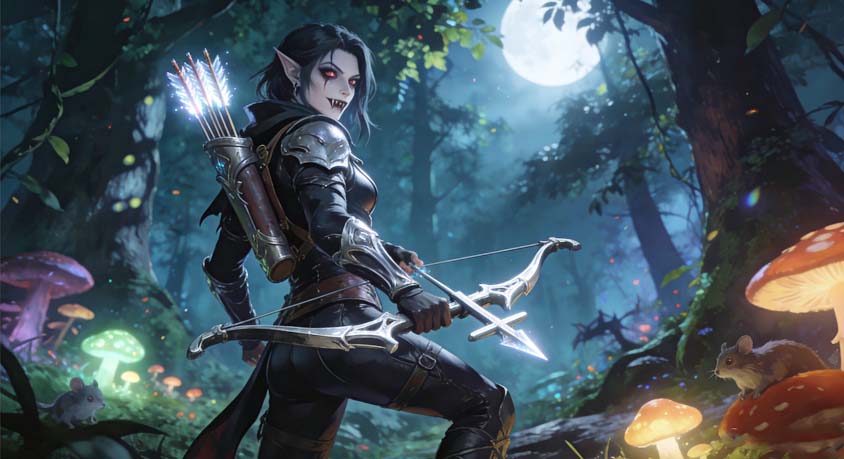
Modern survival games are like fancy coffee shops—sleek, efficient, and so polished you can see your reflection in the menu. V Rising, Ark’s spiritual successors, and their ilk? They’ve got better graphics than Ark’s janky dinosaurs, smoother crafting loops than early survival’s “why can’t I make a rock axe?” frustration, and tutorials that don’t feel like being dropped in a forest with a match and a prayer. But here’s the kicker: They’re missing that messy, unhinged “wilderness vibe” that made Ark and its peers feel like actual survival, not just a well-oiled grind. It’s the age-old question: When you fix all the “flaws,” do you also sand away the soul?
Let’s give credit where it’s due: Newer survival games are objectively better at the “game” part. V Rising’s vampire mechanics—daylight hiding, blood farming, castle building—are tighter than Ark’s buggy taming system. Its quest log doesn’t leave you guessing what to do next (looking at you, Ark’s “figure it out or quit” early game). The graphics are crisp, the crafting trees make sense, and you don’t spend three hours just trying to build a shelter that won’t collapse in a light breeze. These games respect your time, streamline the boring parts, and let you jump into the fun faster. On paper, they’re perfect—so why do some players find themselves longing for Ark’s jank, its random dinosaur ambushes, its “why did my tamed raptor eat my friend?” chaos?
Because that chaos was the point. Ark’s roughness wasn’t a bug—it was a feature. When you spent hours taming a bronto only to have it get stuck on a rock and starve, it hurt—but it also made every successful taming feel like a triumph. When you got lost in the woods at night, fumbling with a torch while a pack of raptors chased you, it was terrifying—but it was also exciting, like you were actually fighting to survive. Newer games are too safe. V Rising’s map is dotted with waypoints, its enemies follow predictable patterns, and even death doesn’t feel punishing. You respawn quickly, lose little progress, and get back to grinding without skipping a beat. It’s convenient, sure—but where’s the story of your friend sacrificing their gear to distract a dragon so you could escape? Where’s the camaraderie born from shared frustration of “we spent two hours building this base and a tornado destroyed it”?
That’s the “soul” we’re talking about—the unscripted moments, the happy accidents, the messy failures that turn a game into a memory. Ark didn’t just let you survive; it threw obstacles at you that forced you to adapt, improvise, and bond with your teammates. You didn’t just build a base—you built a fortress that mattered, because losing it meant losing hours of work. Newer games are so polished, so balanced, that nothing feels truly risky. Death is a minor inconvenience, failure is easily reversed, and there’s little room for those “remember when?” stories. It’s survival with training wheels—safe, but not thrilling.
This isn’t to say newer survival games are bad. They’re great—for players who want a smooth, enjoyable grind. But they’re missing that intangible “wilderness feel” that made early survival games so immersive. Ark felt like you were dropped into a hostile world that didn’t care about you; newer games feel like the world was built for you, with all the sharp edges sanded down. It’s the difference between camping in a curated national park and backpacking in the backcountry—one is comfortable, the other is chaotic, but both have their own magic. At the end of the day, the best survival games aren’t just about surviving—they’re about feeling alive. And sometimes, that means embracing a little chaos.
Disclaimer: Mention of any brand or trademark is for identification only and does not imply partnership or endorsement