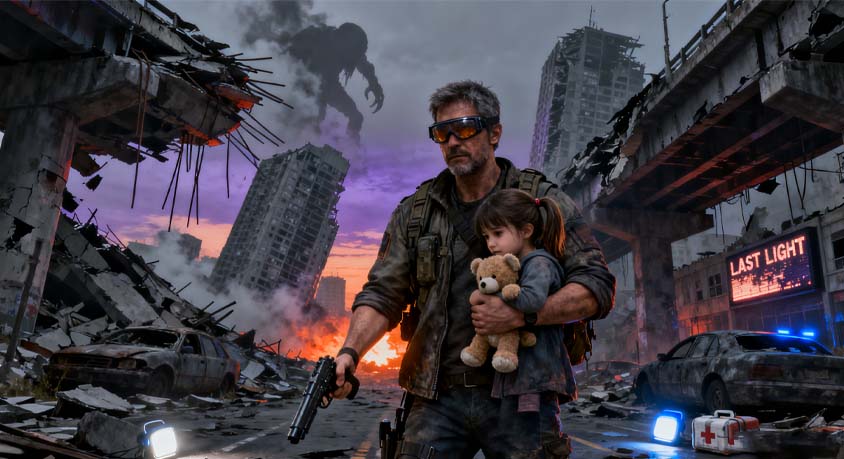
I went into this game thinking it’d be just another “zombies and explosions” fest—perfect for zoning out after a long week of adulting. Instead, I found myself sobbing into my controller 15 minutes in, then clinging to every scrap of cloth like my virtual life depended on it. Spoiler: It did. This isn’t a game about saving the world; it’s about a gruff, grieving dad and the kid he’s stuck protecting in an America that’s turned into a graveyard of overgrown cities and ravenous monsters. And let me tell you—it doesn’t just make you feel the weight of survival; it makes you feel the weight of choices.
The opening hits like a punch to the gut, and I’m not exaggerating. One minute, it’s a normal night, the next, chaos erupts—sirens, screams, a world unraveling faster than a bad sweater. By the time the dust settles, the dad (let’s call him Grumpy McScowl, for accuracy) has lost everything that mattered. I was still wiping my eyes when the game fast-forwards twenty years, and suddenly he’s stuck with a teen girl who’s equal parts sassy and fragile—his last shot at redemption, whether he wants it or not. Cue the road trip from hell: across crumbling highways, through overgrown suburbs, and into the kind of dark corners where you’re just as likely to find a cache of canned beans as a horde of monsters.
Let’s talk about resource scarcity—this game turns you into a hoarder of the most absurd things. I spent 10 minutes crawling through a dilapidated grocery store, ignoring the growls in the next aisle, just to grab a single roll of gauze and a bottle of rubbing alcohol. “This is ridiculous,” I muttered, then immediately panicked when I realized I only had two bullets left. Every decision becomes a tiny crisis: Do I use the scissors to cut through a wire fence, or save them to make a shiv? Do I chug this can of soda now, or hoard it for when the kid gets hungry? The backpack management system is a special kind of torture—you’ll stare at a inventory screen for five minutes, debating whether to ditch a rusted nail for a half-eaten granola bar. It’s absurd, yes, but it’s also genius—because it makes you feel the hunger, the fear, the constant, gnawing worry that you’re one bad call away from running out of supplies.
But the real kicker is the moral dilemma. Early on, I stumbled across a pair of survivors huddled in a gas station, begging for food. Grumpy McScowl’s first instinct was to grab their supplies and run—but the kid looked at me with those big, judgmental eyes, and suddenly I was over here questioning my entire virtual life. “Fine,” I sighed, handing over a can of peaches. Two minutes later, they led us to a hidden stash of medical supplies. Win-win, right? Not always. Another time, I encountered a man who seemed friendly—until he pulled a knife on us, desperate for the antibiotics we were carrying for the kid. I had to make a split-second call: fight back, or run? I chose to fight, and even though it saved us, I felt sick about it for the rest of the level. This game doesn’t let you be a hero; it makes you be a human—flawed, messy, and forced to choose between your own survival and someone else’s.
What surprised me most, though, was the warmth buried under all the grime. There are small moments: sharing a can of soup by a campfire, teaching the kid how to load a gun (while pretending you’re not terrified for her), or just sitting in silence, watching the sun set over a skyline of abandoned skyscrapers. Grumpy McScowl starts out as a guy who’s given up on caring—but slowly, almost reluctantly, he starts to see this kid as more than a mission. He yells at her for wandering off, patches up her scrapes, and even cracks a smile when she makes a bad joke. It’s fatherhood, stripped down to its rawest form—no PTA meetings, no soccer games, just the quiet, stubborn commitment to keep someone else alive, even when you’ve already lost so much.
By the end of the game, my hands were shaking—not from the monster fights, but from the final choice, one that made me question everything I thought I knew about right and wrong. This isn’t a happy game, and it doesn’t wrap things up in a neat bow. But it’s a human game—one that reminds you that even in the darkest of times, love (even the gruff, reluctant kind) is the only thing that keeps us going. I closed the game, stared at my own dad’s contact in my phone, and sent him a text: “Thanks for not letting me starve in a post-apocalyptic world.” He replied with a confused “???” but I know he gets it. Because at the end of the day, that’s what dads do—they hoard the peaches, they fight the bad guys, they keep the light on, even when it feels like the world is ending.
Disclaimer: Mention of any brand or trademark is for identification only and does not imply partnership or endorsement