You spent $10,000 on a centralized lighting system. Every switch is wired to a panel in the basement. It works through a single app. It is elegant. It is seamless. You are proud. You list your house for sale. The buyer walks through. He is 35, technically literate. He asks about the system. You explain it. He nods. Then he asks: "What happens if the company goes out of business? What happens if the app stops being updated? What happens if I want to install a different brand of bulb?" You do not have good answers. He makes a note. He subtracts $10,000 from his offer. He does not want your system. He wants a house he can control. Your upgrade just became a liability.
This is the smart home curse. The assumption is that technology adds value. It does, when it is new. But real estate is not a technology market. It is a durability market. A kitchen renovation holds value because a stove is a stove. It works the same way in 2035 as it did in 2025. A smart home system is the opposite. It depreciates the moment it is installed. It will become obsolete in five years. It requires passwords, subscriptions, and compatibility patches. The buyer sees not convenience, but complexity. And complexity is a discount.
There is no universal standard for home automation that has lasted a decade. X10 died. Insteon died. Zigbee and Z-Wave survive but require specific hubs. Now Matter promises unity, but it is new. A buyer looking at a house with a proprietary system from 2018 sees a ticking clock. They know that at some point, the cloud server will shut down. The app will disappear from the store. The wall switches will become expensive paperweights. They will have to rip it all out and start over. That cost is real. They deduct it from the price.
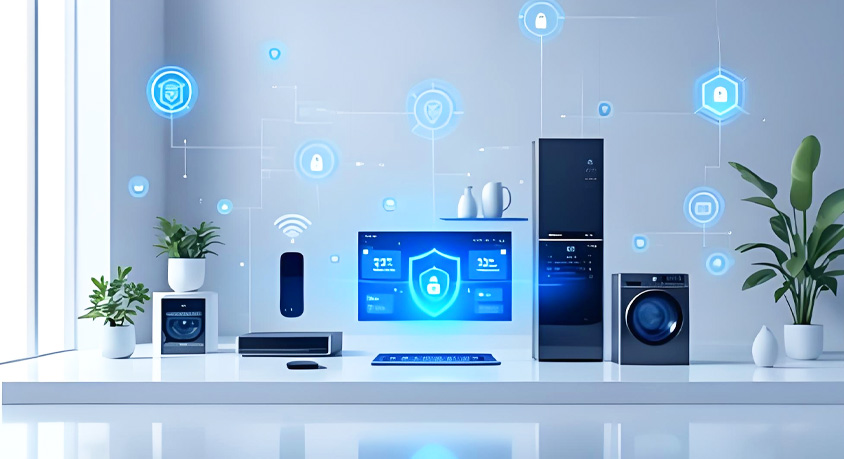
The security angle deepens the discount. A house with twenty connected devices has twenty potential entry points. The buyer does not know if the previous owner changed the default passwords. They do not know if the devices have known vulnerabilities. They do not know if the camera in the nursery was properly wiped. They can change the Wi-Fi password, but some devices retain flash memory. The uncertainty creates risk. Risk creates a lower offer.
There is also the usability gap. The current owner spent years learning the quirks of their system. They know which light is controlled by which scene. They know that the "goodnight" button sometimes forgets the hallway. The buyer knows none of this. They walk in and face a wall of switches that do not behave like switches. They press a button and three lights turn on, but they only wanted one. They are frustrated. They revert to manual. They ignore the smart features. They paid a premium for nothing.
The data supports this. A 2023 survey by the National Association of Realtors found that while home buyers are interested in smart technology, they overwhelmingly prefer systems that are simple, standard, and transferable. They want smart thermostats and smart locks. They do not want whole-home automation that requires a manual. They want devices they can install themselves, not systems that were poured into the walls. The premium is for flexibility, not integration.
If you are upgrading a home to sell, or if you plan to sell in the future, the strategy is specific. First, avoid hardwired proprietary systems. Do not run low-voltage cables to a central panel for lighting control. Use smart switches that look like normal switches and can be replaced individually. If the buyer hates them, they swap one out for $20. They do not rewire the house.
Second, stick to platforms with broad adoption. Matter is the current best bet. It is backed by Apple, Google, Amazon, and the Connectivity Standards Alliance. A Matter-certified device will work with any Matter-certified controller. It is not future-proof, but it is as close as the industry has come. If you install a system that only works through a single vendor's app, you are creating future liability.
Third, document everything. Leave a folder with login credentials, network diagrams, and device lists. Include the admin passwords. Include the support contacts. Make it easy for the new owner to take over. If they walk in and the system just works, and they can change the settings without calling you, they perceive value. If they walk in and cannot even turn on the lights, they perceive a problem.
Fourth, consider leaving nothing. A neutral house with standard switches and good wiring is a blank canvas. The buyer can add their own smart devices, their own ecosystem, their own preferences. They do not have to undo yours. They value the freedom more than the installed base. Your $50,000 upgrade becomes their $50,000 demolition budget. That is not value. That is deferred cost.
The smart home is a personal convenience, not a real estate asset. It makes your life better while you live there. It makes your life easier while you control it. But when you leave, it becomes someone else's problem. And people pay less for problems. The curse is not the technology. It is the assumption that your preferences are universal. They are not. The buyer wants a house they can make their own. If your smart home prevents that, it is not an upgrade. It is an obstacle.
Disclaimer: Mention of any brand or trademark is for identification only and does not imply partnership or endorsement