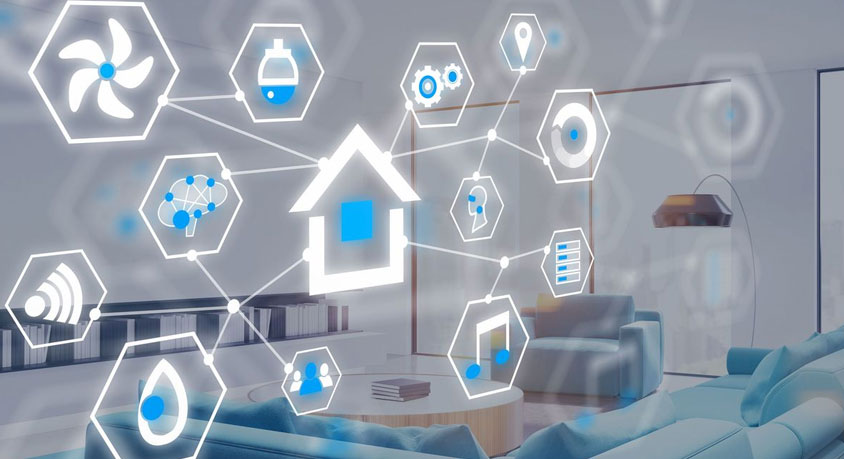
With the rapid development of Internet of Things (IoT) technology, smart homes have gradually moved from concept to reality. A smart home refers to a system where various household devices (such as appliances, lighting, security systems, etc.) are interconnected through IoT technology, allowing for automated control and remote management. In recent years, advancements in sensor technology, wireless communication technology, and artificial intelligence have made smart home functions increasingly powerful. Smart homes not only enhance the convenience of daily life but also effectively improve home security and energy efficiency.
The realization of smart homes relies on the integration of multiple core technologies. Among these, IoT technology is crucial, as it enables various devices in the home to connect and communicate with each other. By installing sensors in appliances or furniture, these devices can detect environmental changes such as temperature, humidity, and light, and perform automated operations based on preset rules. Additionally, the application of cloud computing and big data technology allows smart homes to analyze user behavior, providing more personalized services. Wireless communication technologies (such as Wi-Fi, Zigbee, Bluetooth) ensure stable connections and efficient communication between devices.
Although smart homes bring numerous conveniences, their security and privacy issues cannot be ignored. The connectivity of smart devices implies potential network security risks, such as hacking that may lead to data breaches or remote control of devices. To ensure the security of smart homes, both manufacturers and users need to take necessary protective measures, such as using strong passwords, regularly updating firmware, and enabling two-factor authentication. Additionally, users should prioritize brands and devices with high security standards when choosing smart home products to reduce security risks.
Smart homes not only enhance convenience but also show significant advantages in energy saving and environmental protection. Through smart temperature control systems and smart lighting systems, household energy consumption can be precisely managed. For example, smart temperature control systems can automatically adjust the temperature based on room usage to avoid energy waste; smart lighting systems can adjust light brightness according to ambient light and human activity, further reducing electricity consumption. Moreover, smart appliances help optimize energy use, such as smart refrigerators adjusting cooling strength based on food storage conditions to achieve energy-saving effects.
As technology continues to advance, the future of smart homes will become more intelligent and personalized. Advances in artificial intelligence will enable smart home systems to better understand user behavior and provide more precise services. For instance, future smart homes might feature self-learning capabilities that automatically optimize device settings based on users' lifestyles. Furthermore, smart homes will focus more on seamless cross-device connectivity, achieving interoperability between different brands and types of devices to offer a smoother user experience.
The widespread adoption of smart homes will not only change daily life but also have profound impacts on a broader societal level. For example, the popularity of smart homes may drive the development of new industrial chains, such as smart hardware manufacturing and smart service platforms, thereby promoting economic growth. Additionally, the promotion of smart homes may help alleviate energy crises by improving energy efficiency and reducing carbon emissions, contributing positively to environmental protection. As technology continues to mature, smart homes will undoubtedly become a crucial part of future society, creating a safer, more comfortable, and environmentally friendly living environment for humanity.
Disclaimer: Mention of any brand or trademark is for identification only and does not imply partnership or endorsement