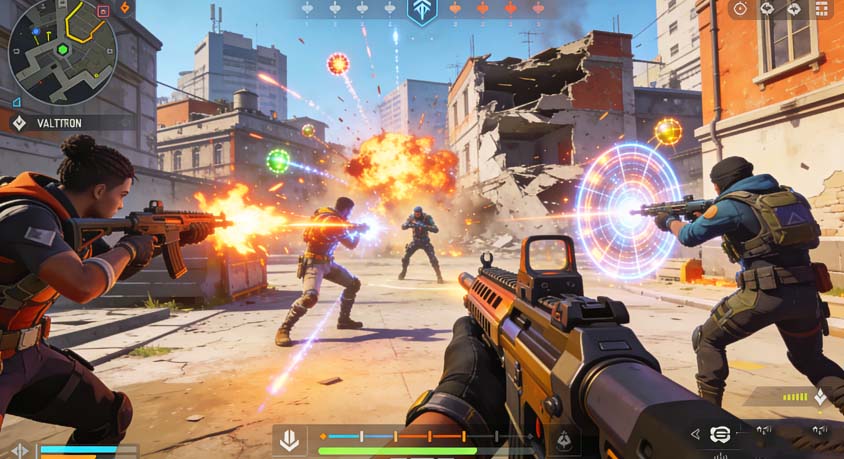
Let's address the eight-hundred-pound cybernetic elephant in the room right away. The idea of bringing Valorant—a game so surgically precise that its community debates pixel-perfect crosshair placement and millisecond reaction times—to the wild, analog-stick-waving frontier of console gaming feels less like a port and more like a fascinating, slightly mad social experiment. It's like trying to perform a violin concerto with a pair of hammers. The entire identity of the PC version is built on a foundation of absolute, unassisted mechanical skill. So, when I finally booted up the console beta, my dominant emotion wasn't excitement; it was a deep, philosophical curiosity bordering on dread. I wasn't just testing a game. I was testing a hypothesis: can you transplant the heart of a hardcore tactical shooter into a new body with different nerves, and have it beat the same way? The short answer is no. But the long answer is a weirdly compelling story about creating a different heart entirely, one that beats to the rhythm of what I can only describe as "respectfully aggressive helper software."
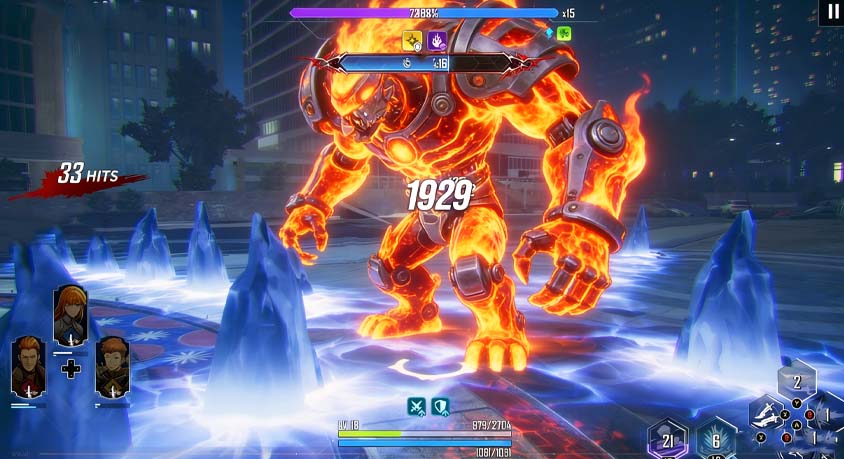
The first thing you notice isn't the graphics (crisp) or the framerate (smooth). It's the quiet, omnipresent hum of the aim assist. Calling it a "cheat code" is both hilariously reductive and emotionally accurate for a PC purist. On PC, your miss is your own. The shame is private, a silent pact between you, your mouse, and your terrible decisions. On the console, there's a gentle, digital nanny. As your crosshair drifts near an enemy, it experiences a subtle magnetic pull, a softening of the stick's resistance. It's not snapping to heads like an old-school aimbot; it's more like the game is constantly offering you a polite, "Pardon me, sir, but the target you wish to violently dispatch is just here. Shall I hold the door?" For a veteran of the raw, unmediated chaos of PC shooters, it feels profoundly alien. Your successes feel partially co-authored. Your failures feel like you've let down a very patient robot tutor.
This creates a completely inverted skill ceiling. On PC, the ceiling is about refining an already precise instrument (your hand) to its absolute limit. On the console, the ceiling is about mastering the relationship with the assistant. It's about understanding its subtlety, knowing when to let it guide your micro-adjustments for those impossible flick shots, and when to aggressively fight against its pull to track a strafing enemy or switch targets. The "outplay" isn't just about game sense and positioning anymore (though those are still 80% of the battle); it's about who can more seamlessly merge their human intent with this digital guidance system. The fantasy shifts from "I am a sharpshooter" to "I am in perfect sync with a machine designed to make me feel like a sharpshooter." It's a different kind of power trip, one based on harmony rather than absolute dominion.
So, can a controller player "beat" a mouse and keyboard player? In a hypothetical, cross-play nightmare scenario, probably not in a pure, long-range duel. The raw speed and fidelity of a mouse would win. But that's missing the point. Valorant on console isn't trying to replicate the PC experience. It's trying to create a parallel, self-contained universe where the rules of engagement are rewritten around a new, universally available tool: the aim assist. Within that universe, the competition is just as fierce, the mind games are just as intense, and the thrill of a clutch defuse is identical. It's a separate but equal ecosystem of stress and satisfaction.
The console port, then, is a triumph of intelligent adaptation, not a dilution. It acknowledges the physical reality of the controller and builds a new kind of competitive playground around it. It's less a "cheat code" and more a fundamental rebalancing of the laws of physics for a new continent. Is it the pure, unadulterated Valorant experience? No. But it is a remarkably faithful translation of its spirit—the tension, the strategy, the teamplay—into a language that thumbs can speak fluently.
Disclaimer: Mention of any brand or trademark is for identification only and does not imply partnership or endorsement